


Our History
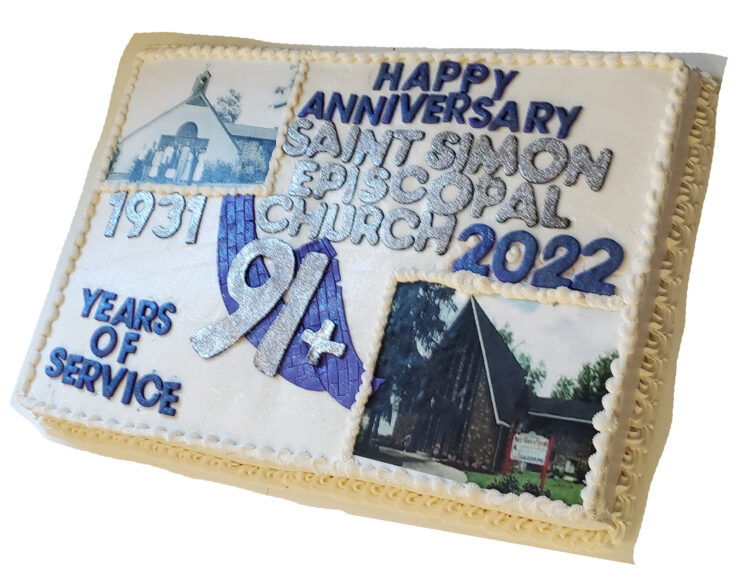
The story of St. Simon’s is a story of a community… of a people. Established in 1931 by the Sisters of the Transfiguration, St. Simon of Cyrene Episcopal Church and St. Monica’s Community Center have supported the historically black community of Lincoln Heights for almost a century. Bishop Burgess, the first African-American bishop in the Episcopal Church (1962-1975) says this about St. Simon’s:
“I know of no other Mission project in the Black community that has fared as well as St. Monica’s and St. Simon’s. Some in New York, Jersey City, Philadelphia and Boston have received more publicity, but few have survived their first workers’ original enthusiasm. The Sisters’ work has become evidence that work can be started in a black neighborhood where there has been no previous knowledge of the Episcopal Church. Someday someone will write the full account of our work in Lincoln Heights and how a mission was not only started but brought to maturity because of the fundamentals of all Christian work — respect and love for the people, willingness to work hard and long, forgetfulness of self and devotion and obedience to the One who called them.”
The Beginning
St. Simon’s Mission began in what has been called the “Great Depression.” In the 1920’s a number of Black families had moved from the crowded West End of Cincinnati to an area north of Lockland and east of Woodlawn. This settlement was called Woodlawn Terrace. It was later to become incorporated as the City of Lincoln Heights. Small houses were built and streets laid out. A few small stores were started. As the Depression began and deepened, many persons became unemployed, some lost homes, others their household belongings, and many of the area families became impoverished.
As the Sisters rode past this area on their way to and from Cincinnati, they became conscious of the poverty and the lack of churches. Mother Beatrice, our Superior, seeing the condition of Woodlawn Terrace, wrote: “As we drove past I said to the Sisters: ‘Something ought to be done!’ Then one day, in 1930, an inner Voice said, ‘Do it yourself’.” After consulting with her Council, and seeking help from Associates and friends, money was raised to buy a small two-story frame house on the corner of Independence and Douglas Streets in the northeast corner of what was called “the upper subdivision”, or more familiarly, “the Upper Sub”. The house worked well for mission work — providing a large first floor room as the Chapel and meeting room and a kitchen; on the second floor a small room for group meetings, a place for storage, and the bathroom.
There were two lots in addition to the one upon which the house stood. The house was called “the Mission House of St. Simon of Cyrene.”
Service of Dedication
The Sisters led a Service of Dedication for the new mission on Mother Foundress Day, February 9. Before the day of the Service, several Sisters visited the community, telling the neighbors of the work being planned. The first worship service at St. Simon’s was held on the Eve of Mother Foundress Day, February 8, 1931. The Rev. Gerald Lewis, Chaplain of the Mother House in Glendale, was the Celebrant; Canon Gilbert Symons preached the sermon, his topic being St. Simon of Cyrene.
The first floor rooms were crowded with adults and children. It was announced that there would be a regular Sunday Service and that certain activities would be started. It was soon evident that a Church building was needed, and in 1932, Mrs. Mortimer Matthews offered $10,000 for its construction. Her son, Stanley Matthews, an architect, designed an attractive crypt church to be built next to the Mission House. Mr. James Hunter and Mr. Walter Espy, residents of Lincoln Heights, were hired as contractors. Mr. Hunter’s sons, Julian and Cecil, and a number of other residents assisted them. As they all had been out of work, to help the Church for their employment, they offered to work for pay one day, and give their services the second day. Almost all of those helping to build the Church later became active members in the congregation.
St. Simon's Day School
Throughout the forty years of its existence St. Simon’s Day School not only educated hundreds of children but prepared many for leadership in Lincoln Heights and elsewhere. John Marvin Evans, a first-grade pupil in 1931, went on to college and seminary to become the first Episcopal priest from St. Simon’s Mission. He served as a Chaplain in the Navy for many years and when he retired from the Navy he led the St. Barbara’s Mission in California until his untimely death in 1986. Samuel Mays, another in the 1931 first grade, became a Lincoln Heights Councilman and was active in civic affairs. LaVerne Mitchell and James Mobley served as Mayors of Lincoln Heights. Willis Holloway and Eddie Starr were prominent in the educational field. Members James Mobley, Theorphlis (Top) M. Borden and Colenthia Hunter became deacons in the Diocese, serving a number of parishes in the greater Cincinnati area. Perhaps the best known alumni is Nikki Giovanni, who excelled as a poet and other artistic accomplishments. Of course, the most important outcome of St. Simon’s School was the formation of Christian character in the lives of many and nurturing Christian leadership in the community and in the Church. St Simon’s priests who later served as bishops were the Rt. Rev. John M. Burgess and the Most Rev. Michael Curry.
St. Simon's Sunday School
While the Sisters primarily focused on St. Simon’s Day School during the years 1946 to 1971, they also attended to other mission activities, especially the St. Simon’s Sunday school. With a lot of nurture during the early days of the Mission, the Sunday school tended to the spiritual formation of over 170 children by 1940. Under Father Burgess and the Sisters, this spiritual community of children continued to flourish. In 1946-47 four of the St. Simon’s high school girls aided the Sisters with their classes. Among those who directed the School after both Sister Olivia and Sister Esther retired were Sisters Evelyn, Theodora, Winifred, Virginia, Althea, and Laura. Gradually lay people led most of the classes, and by 1965 the Sisters no longer assisted with the Sunday school. However, in 1972 Father Golden, the new rector at St. Simon’s, asked the Sisters to partner with him in developing a curriculum and serve as advisors to the teaching staff. Unfortunately, during the 1970’s when priests served for short tenures the partnership with the Sisters declined.
This changed when Father Michael Curry became Priest in Charge in 1983. He started a church school at St. Monica’s House for the children of the Mission and the St. Monica’s Recreation Center members. It was held one Saturday a month for four hours, including a worship service, religious education and a lunch in the St. Simon’s parish hall which Father Curry directed. Three Sisters helped with the school; with the remaining staff comprised of St. Simon’s members. Interestingly, all but one of these were members of early St. Simon’s families, whose parents had been active during the years when Father Burgess was the Mission priest. The school began during the morning and closed with a brief meeting after lunch. After three years this arrangement evolved into a Sunday school for the St. Simon’s children, which was held in the Parish Hall of the Mission.
Helping the neighborhood
The Social Service Work, which had occupied much of Sister Olivia’s time in the early days, was carried on to a limited extent after she was elected Superior of the Order. For a number of years one Sister was able to give one day a week to this ministry. In 1953, after her ten years as Superior, Sister Olivia returned to the work on a part-time basis. She was joined by Sister Mary Luke in the sixties, first as a postulant and then as Novice and Professed Sister. After Sister Olivia was sent to the work in Texas in the late sixties, Sister Mary Luke continued the visiting and helping individuals and families on a full-time basis. In her report of 1970-71 Sister Laura, in Charge of the Mission work wrote: “Sister Mary Luke’s work with those in need in the whole area around Lincoln Heights is varied and interesting.” She stated that one project was that of helping a family whose home had been burned. The family was housed for six days in the Bethany School Infirmary. A plea for help was placed in the Mill Creek Valley paper and the response was generous. The family was able to make a down payment on the purchase of a house, this being possible through a Federal plan, and moved into it. By 1972 Sister Mary Luke’s work had become so extensive that a section was devoted to it in the Annual Report of the Community. In 1973 the report included a description of work with prisoners in the Hamilton County Jail and several State Prisons. Sister Mary Luke was assisted in her work by Sister Ann Margaret, later to become Mother Superior of the Order.
Many families in Lincoln Heights received help from St. Monica’s. Eighteen families were given donations of food at Thanksgiving in 1973 and at Christmas over five hundred children and adults received presents. The number aided increased in scope during the seventies. Not only was additional money added to the budget for social service work, but Sister Mary Luke’s ability in securing help from businessmen and other interested persons began to be evident. With more ample funds the Christmas giving was increased. In addition, an Easter Egg Hunt was inaugurated in a large area between the upper and lower subdivisions. This involved youngsters from the whole community. Those who found plastic eggs were given small toys left over from the Christmas project and those fortunate enough to find one of the eight golden eggs received Bibles. Beginning in 1976 a Lions Club in Lincoln Heights began taking part in the Hunt, dying dozens of real eggs and helping with preparing and running the Hunt. The men seemed to enjoy it as much as the children. The increased budget made two scholarships to Bethany School possible. One of the two boys who received the first scholarships had been in foster homes since the age of five. Later he was enrolled in the Farm School in Pennsylvania. In her work Sister Mary Luke worked with county and city agencies. Even the Lincoln Heights Police asked her help in difficult situations.
In 1976 Sister Mary Luke was able to help other Branch works of the Community of the Transfiguration. Many cartons of toys, candy and athletic goods were sent to the Sisters working at St. Michael’s House in Ponce, Puerto Rico. Toys and gifts were given to nearby home and agencies. It was in this year that the Sisters began taking boys from Lincoln Heights on long field trips. The first one was to Gatlinburg, Cherokee and Bat Cave. Another year there was a trip to northern Ohio, which was the inspiration for the plan to build a permanent place for taking the children. In 1978 when Sister Mary Luke was appointed Sister-in-Charge of St. Monica’s House and assumed the direction of the Recreation Center, the social work had to be limited to a certain extent. Some of it was incorporated into the Center work. The Christmas, Thanksgiving and Easter projects became part of the Center’s program, with the introduction of Christmas parties in the Recreation rooms.
There was a continuation of emergency trips to the hospitals and city agencies, and aid to needy families was also continued. Several Sisters helped on special occasions with Sister Ann still serving as a part-time assistant. A fine staff, consisting of Jewel Bennett, Doris Thomas and Kim Jamison were in charge of the Center’s daily program, with some part-time employees for the maintenance and cleaning of the house and grounds. After assuming charge of the work, Sister Mary Luke lived in the apartment on the third floor of the house. On the second floor the clubroom was divided to make a small chapel and a bedroom which could be used for guests or employees. In 1982 three boys, whose mother had died, used the room for several months until they could be placed with relatives. They were cared for by Sister and the St. Monica’s staff. When three Amish girls spent a week at St. Monica’s the room was used. Later the St. Monica’s bedroom provided a home for a Korean woman and her small son, who were forced to leave a mentally-ill and abusive husband. The son was a brilliant boy and was in Bethany School. Since the Parks left the room has been used several times. Scott Olean, a boy whose mother was ill, was the most recent resident. With many of the Lincoln Heights men being out of work, employment was again provided for several men in a project of Sister Mary Luke’s, to add a large multipurpose room on the ground floor of the Center. As a roof for that and also for the other rooms whose roof was leaking, the roof of the whole unit was built by three Amish men from the area near Tabor Cottage in northeast Ohio. Another project undertaken by Mr. Julian Hunter, who had helped build the St. Simon’s Crypt Church in 1932, was the restoring of a fireplace in St. Monica’s House, and others also built an attractive entrance to the grounds, as well as making some renovations in the buildings.
Vacation Bible School
I have already mentioned the first Vacation Bible School, held the summer of 1931, which was instrumental in bringing families into the Church and because of which St. Simon’s Day School was started. In 1932 there were so many children asking to enroll that a second session was held in the afternoon. The number of the two sessions combined was 120 children and young people. In 1933 the two sessions numbered 135. However, with the Schools lasting four weeks, two sessions proved too strenuous for the Sisters and their assistants, so in 1934 only the morning sessions took place with some children having to be refused admittance. This was corrected in 1936 as the use of the new St. Monica’s Center and School allowed a large attendance. One of the special features of the Vacation Bible School was a closing pageant, in which the entire school participated. The pageants held on the front lawn of St. Monica’s proved to be very popular and beautiful pageants were held there for many years.
The four-week Vacation School continued during the forties. In 1947 it was reported that there was an attendance of 135 with 59 receiving certificates for perfect attendance. Three St. Simon’s High School girls aided the priest, Father Harrison, and the Sisters. The next year the staff was augmented by three college students who came to the Mission as summer workers. These girls, Amy Ho, from St. Mary’s School, Shanghai, China, Leila Brom from Hampton Institute and Helen Paine from St. Augustine’s College.
With the increased occupation with the Day School, the Summer Program had to be limited. The succeeding Vacation Bible Schools were held for one week only and in the sixties the V.B.S. program was dropped. The Lincoln Heights Recreation Department used the grounds for an athletic program, sponsoring baseball and other games. However, in 1972 a Vacation School was again held, under Sister Laura’s direction, and continued for several years. Then again in 1982 it was revived by Father Michael Curry, the Rector of St. Simon’s, who was aided by Sister Gloria and Sister Joy. After two years the project was again abandoned. This was partly due to the erection and use of Tabor Cottage in northern Ohio, as a summer recreational facility for the St. Monica’s children.
Although the Vacation Bible School has become an event of the past there is no doubt that throughout the years, the Schools had a lasting effect on hundreds of Lincoln Heights children. Memories of handcraft projects, religious teaching, pageants and team games have made an indelible mark, spiritually, socially and physically on those who participated. We are thankful for the many years of the St. Simon’s Vacation Bible Schools and for the Sisters and Church people who made them possible.
St. Monica's Recreation Center
St. Monica’s Recreation Center has actually had the longest existence of any phase of the Sister’s work in Lincoln Heights, with the exception of the Church itself. Starting in 1935 as an outgrowth of the work with young people begun by Sister Esther in 1933 it was first located in a Lodge Building on Independence Street. When the Lodge burned in 1935 the Center was moved into St. Monica’s House, the house which Mrs. Matthews had given the Sisters especially for the- Center and Day School. From 1935 on the Recreation Center has had a continued existence, even though the use for the facilities was greatly curtailed during the growth of St. Simon’s Day School. While much of the early history has already been given in the development of the St. Simon’s work, it is again included to make a complete picture of St. Monica’s Recreation Center. For 55 years there has been a Center for the use of the children and young people of Lincoln Heights.
St. Monica’s House received its name from Mrs. Matthews in memory of her sister-in-law, Mrs. Harland Cleveland. Mrs. Cleveland, although elderly, had become a novice in the Community of the Transfiguration taking the name of Sister Monica. Unfortunately, she had to leave the Order because of ill health, and had died in 1933. The name St. Monica’s was also appropriate, as St. Monica was the mother of St. Augustine, Bishop of Hippo in northern Africa.
The house had been a farmhouse before the area was settled. It was perhaps fifty years old and was a charming house with stained glass windows, a spiral staircase and beautiful woodwork. Its large grounds adjoined the St. Simon’s Mission grounds. Mrs. Matthews had three schoolrooms for the small St. Simon’s Day School added to the rear of the building.
The Recreation Center occupied the three downstairs rooms, hallway, sitting room and dining room. The large hall served as the entrance to the Center, with equipment for the hostess, a radio, and lounging chairs. A ping pong table was placed in the sitting-room, and tables for small games in the dining room, a shuffleboard court was painted on the large porch of the house. The kitchen was used by Church groups, as well as by the Center. Upstairs the double front room was prepared for parochial meetings and activities and for the Hobby Clubs. A smaller upstairs room served as an office for the Sister-in-Charge. On the third floor a very attractive apartment was made, at first as the residence of Father Greenwood, a single priest, and later on as a place for the Sisters working at St. Monica’s.
During the first years of its existence St. Monica’s House served both as a Recreational Center and as a parish house for St. Simon’s. The Boy Scouts, Campfire Girls, Men’s Club, Women’s Auxiliary, Young Churchmen, Young People’s Fellowship, and Cooperative Society all held their meetings in the Club Room on the second floor. In the afternoons there were handcrafts, folk dancing, music and games hobby clubs held in the Clubroom. There was continued use of St. Monica’s for Church meetings and activities especially during Father Burgess’ tenure. In 194445 a Youth Canteen was held on Friday nights, run by the Young Churchmen and the Women’s Auxiliary. This proved very popular with the young people of Lincoln Heights and nearby communities.
As the Day School began adding grades after 1946, the House was used more and more for the School and its use for the Recreational Activities had to be limited. The front rooms of the House were still used by the Center in the afternoons and evenings, although much movement of furniture and equipment was necessary. When the upstairs clubroom was converted into a school classroom, the parish activities were cancelled. The Hobby Clubs were disbanded and the number of children and young people using the Center became smaller.
The outdoor recreation, however, continued to flourish. In 1946 Mrs. Matthews purchased a large field adjoining St. Monica’s House to be used as a baseball diamond. This added to the two tennis courts and the playground next to St. Simon’s Church provided a fine out door area. In 1946 under the stimulus of Sister Evelyn, a Recreation Council, under the presidency of Raymond Chapman, formed to administer the recreation program. During the succeeding summers the Council carried on an extensive program of baseball, basketball, tennis and boxing. In 1948 the boy’s baseball team won the trophy in their league and the boxers won all their matches.
The Recreational Council continued until 1958. From then until 1966 there was an informal use of the grounds. In 1966 the Lincoln Heights Recreation Department, under the National AntiPoverty Program, took over the supervision of the grounds. Seven young girls and ten young men were employed to help in recreational activities. This was not the first time St. Monica’s had used government programs. During the World War II years, the Center used personnel in the Hobby Clubs, a tap dancing teacher and a dramatic leader. The addition of a Headstart Program using the indoor St. Monica’s facilities, already limited by Day School use, caused the closing of the indoor Recreational Program from 1969 to 1971, when the Day School was closed.
Sister Laura, in charge of St. Monica’s House in 1971, resumed the work of recreation, converting the downstairs school rooms into the Recreation Center. The children using this center grew from a handful to an average attendance of 35. The furniture, materials and equipment were utilized and new recreation equipment added. The Headstart Program continued to use the front rooms, while the Lincoln Heights Recreation Department continued to use the out-of-door facilities.
The age range of the Center was limited for children from four to fourteen. Churches in the area and C.T. Associates aided in providing new games and play materials. Sister Laura then left the work to take additional studies. St. Monica’s House became the charge of Sister Virginia and Sister Alice; they were assisted by Mrs. Doris Thomas, who had worked for several years with Sister Laura.
In addition to her social service work, Sister Mary Luke assumed the task of running St. Monica’s Center in 1978. The age limit was changed from six to eighteen. She introduced pool tables, foosball tables and air hockey in addition to the ping-pong tables and table games. A picnic area was made on the grounds to the north of the Center rooms. Children from Woodlawn began coming to the Center with those from Lincoln Heights. For several years, the Christmas programs and Easter Egg Hunt had been part of the social service ministry. With the advent of Sister Mary Luke at St. Monica’s Center, they became part of the Center’s activities.
In 1981 St. Monica’s celebrated the 50th Anniversary of the founding of St. Simon’s Mission and the Sisters’ ministry in Lincoln Heights. The first service was Evensong on February 8, held in the small Chapel which had been arranged on the second floor of the House. Thirty children and adults crowded into the chapel. Then on February 12 the formal celebration took place on the front lawn of St. Monica’s with a large attendance. However, as it began to rain soon after the Celebration started everyone crowded into the house. Many of those present had been members of St. Simon’s and St. Monica’s during the “30’s” and even though the remaining part of the celebration was held under difficult conditions, it brought back happy memories of the past. Bishop Burgess celebrated the Mass, and John Marvin Evans, the first St. Simon’s young man to become a priest, read the Gospel. Many Sisters were present, including Sister Esther, who had come from Puerto Rico for the occasion. As a gift to the children and in thanksgiving for the many Sisters who had worked at St. Simon’s and the Center, a large playground, which had been built on a lot adjoining the baseball field, was dedicated to the Sisters, and a flagpole on the front lawn was dedicated in honor of Sister Esther.
Sister Mary Luke, in spite of much illness during 1981, was able to oversee a number of additions to the Center and to the program. One of these was the installing of a craftroom in the former kindergarten room. Equipment was also secured to wash the uniforms of the St. Monica’s Baseball Team, which she had started. The team traveled to Detroit, Windsor, Akron, and Toledo. It was runner-up in the Regional League. Sister was aided with the team by two young men. The Center Staff consisted of Jewel Bennett, Doris Thomas and Kim Jamison. Sister Ann Margaret was a part-time assistant.
In 1984 the very large multipurpose room, which has already been mentioned, was added to the ground floor school room area of St. Monica’s Center. This room serves as recreation area for foosball, ping pong, ice hockey, an electric shuffleboard table and many table games. Recently two televisions have been installed for “Nintendo” games. Also the room serves for parties and dances at Christmas, Valentine’s Day, and for special services. This room has added much to the popularity of the Center and children come from as far away as Lockland and Forest Park. The Rt. Rev. William Black blessed the multipurpose room in November of 1984 during a Service of Evening Prayer. Father Curry led the Service, which was attended by the Sisters and a large number of children and adults.
Each year has seen new projects added to the St. Monica’s program. Various classes have been added. These include handicraft, ceramics, cooking and sewing. One of the Novices, Sister Joyce, carried on a cooking class for over a year. The boys (and a few girls!) prepared an entire meal, which they then enjoyed in the attractive St. Monica’s dining room, learning not only cooking but how to set tables, table manners, as well as entertaining and sharing. For the sewing class, which started in 1990 under the direction of Sister Marcia, then a Postulant, computer sewing machines have been provided. An attractive television and video room has been arranged for the viewing of special movies and programs.
A room off the multipurpose room is used for Lego and Playmobile construction. Attractive Lego villages have been made by the boys and girls. With the addition of Playmobile construction in 1990, a very fine display has been set up, including a Victorian House, a circus, with a train running around it, a large playground, many conveniences, homes, stores, and people. A picture of this has been submitted to a Playmobile contest, the first prize of which is to be a trip to Disneyland.
Without exaggeration it can be said that St. Monica’s Recreation Center is probably one of the best equipped of any Center in Cincinnati and even in the state of Ohio. In spite of the fact that hundreds of children and young people have used the Center, there has been no vandalism or rowdy behavior. At least two other Recreation Centers in the area have had to close because of mistreatment. There have been perhaps two reasons for this: one is that those who come regard the Center as their own. They are proud of it and want to keep it in good condition. The second is that the Staff does not permit undisciplined behavior and occasionally a child or young person has to be suspended for a short time. Discipline problems are rare and quickly handled. Outside people who come to teach classes, such as the handicraft and ceramics, as well as visitors, are impressed by the good behavior of the children.
Since the time of Father Harrison, the rapid succession of priests at St. Simon’s Mission has caused a growing separation of the St. Simon’s Church and St. Monica’s House activities. In its early years St. Monica’s was a part of the Mission program, with the house serving as a parish house. The Sisters were involved in all of the parish activities. The Church property, and the low income houses, originally owned by the Community of the Transfiguration, were turned over to the Diocese of Southern Ohio in 1938 for the use of St. Simon’s Mission. Any profit from the low income houses was to aid the work of the Mission. St. Monica’s House and grounds have remained as property of the Society of the Transfiguration. With the closing of the St. Simon’s Day School, using St. Monica’s House, both the Mission and St. Monica’s House have carried on their own programs and activities, although they occasionally combine as they did for the Fiftieth Anniversary of the Mission work.
Tabor Cottage
A very large project undertaken by Sister Mary Luke was the erection of Tabor Cottage, on land purchased by the Community in northern Ohio adjacent to a settlement of Amish families. The land was a section secured from the KOA Camp and bordered on its grounds. With the use of mobile homes an attractive building was created. The purpose of the Cottage was to provide a place where small groups of St. Monica’s children could be taken for a summer outing. A number of recreation opportunities were nearby — swimming, boating, fishing, etc. In 1983 over eighty children and adults enjoyed Tabor Cottage. Five to seven youngsters were taken each week for four or five days of vacation.
In 1981 a beautiful log Chapel was built for a center of worship. Later other rooms, a small cottage and small barns for storage were added. The present project is a large barn, being fitted up for a recreation center, where the children can play in bad weather. Besides its use in summer, Tabor Cottage is sometimes used by the Sisters for rest or retreats. Also, groups of St. Simon’s children have been taken during the winter months for outdoor sports — skiing and skating. The Cottage does not have a multipurpose room, but it certainly has multipurpose use! The Cottage, as well as St. Monica’s House, is a testimony to Sister Mary Luke’s ability to interest business men and manufacturing companies to donate money and supplies to this vital ministry with children and young people.
As Tabor Cottage is in Amish Territory, an unusual friendship has developed between the Amish and the Sisters. Several Amish men built the lovely Chapel, a number of the women and young girls have helped with the care of the Cottage and grounds, as well as assisting Sister Mary Luke with the groups of children on their outings. I have mentioned the project of the St. Monica’s roof built by several Amish men. The help has been mutual, as the Sisters, especially Sister Mary Luke, have helped a family establish a home bakery, taking members of the family on trips to Columbus, Cleveland, Millersburg and other places to buy the necessary equipment. The Sisters have also taken people to hospitals and have helped in other ways. The Sisters have been invited to weddings, religious services and other events.
Affiliation with Habitat for Humanity
The church’s support and involvement with Habitat for Humanity has been one of the most rewarding and sustaining outreach efforts. In l986 St. Simon joined with Ascension and Holy Trinity Episcopal Church and Wyoming Presbyterian Church to establish Millcreek Valley Habitat. Since its beginning, the organization had built and remodeled over 60 homes in Lincoln Heights, Lockland, Woodlawn, Glendale, Blue Ash and West College Hill.
Over the years St. Simon has provided leadership and volunteers for the organization i.e., board members, officers, construction leaders and laborers. The church has made annual financial donations to help sustain Millcreek Valley Habitat’s budget.
The Sisters working at St. Simon’s and St. Monica’s throughout the years have tried to exemplify the above. God has blessed their ministry in the sixty years of the work in Lincoln Heights. God willing, it will continue to show forth his Glory in the devoted and enriched Christian lives of those to whom the Sisters minister.
Adapted from a history written in 1991 by Sister Esther Mary. The 75th Anniversary Committee provided information re: 1992-2006.